
 Australia has a new prime minister — an outcome foreshadowed in earlier articles. Most commentators believe the decision to revive British imperial titles as part of Australian national honors, and in particular to confer an Australian knighthood on Prince Philip, husband of the country’s head of state, helped to cement several key pathologies about Prime Minister Tony Abbott’s leadership. Proper process was missing, his political judgment was flawed and he was trapped in a nostalgic prism of the past increasingly out of tune with the country. His successor, Malcolm Turnbull, has repositioned the government as future oriented.
Abbott’s knighthood decision helped to revive the question of Australia becoming a republic and Turnbull is a past head of the Australian Republic Movement. In a craftily worded referendum many years ago, Prime Minister John Howard — a staunch monarchist — managed to kill the momentum toward a republic and Turnbull has more recently conceded that the move is doomed during the reign of the present queen.
The debate on becoming a republic cannot be divorced from the method of choosing a president. If Australians want an executive president, the head of state must be directly elected to confer the mantle of democratic legitimacy on the combined office of head of government and state. For a number of reasons, presidential government is inferior to parliamentary government in general and would clash with Australia’s political culture in particular.
The alternative need not be restricted to nomination by the prime minister, which is anathema to most. For this particular debate, no country in the world is as close to the Australian model as India: a Westminster parliamentary democracy with a federal structure. Moreover, the system has been in operation since 1950, when India became a republic (on Jan. 26, no less, which is also Australia Day). Considering it has worked well in Indian conditions of deep poverty, immense diversity and vast complexity, Australians should be able to adopt and operate it with relative ease.
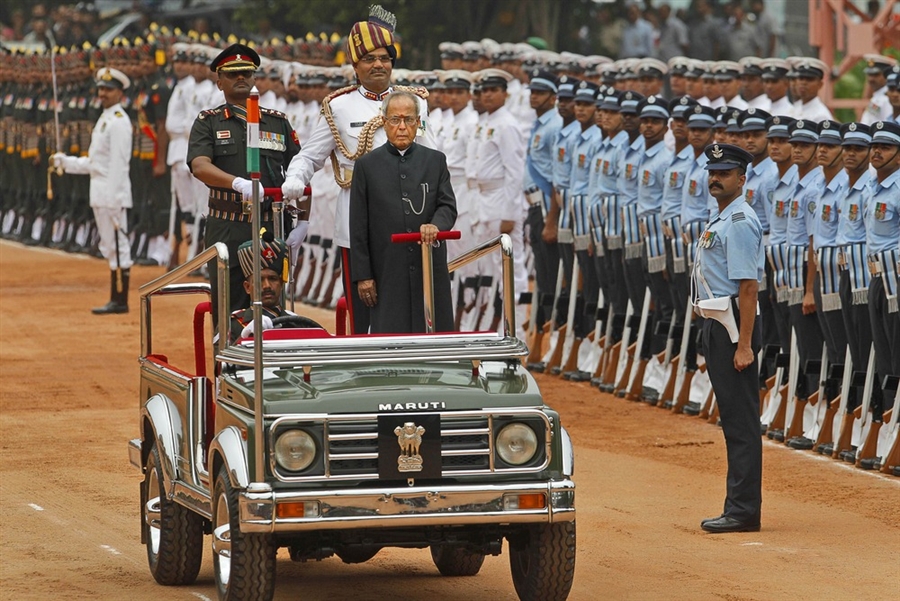
The office of the President of the Republic of India confers status bereft of power. Under normal circumstances, the president’s powers are purely ornamental, comprising appointive, dismissive, legislative (giving assent to bills) and symbolic functions. Presidential ambitions have been circumscribed too by the method of election: chosen by legislators rather than by direct election, presidents may not challenge those who have been directly elected by the people. The president represents and symbolizes the nation, but neither reigns nor rules over the country.
The discretionary latitude available to a president depends less on the office or the incumbent and more on the state of party politics. The epicenter of government is the prime minister and the Cabinet, not the president. If the prime minister commands the loyalty of the Cabinet and the confidence of parliament, there is little scope for independent presidential initiatives.
Some powers of the president — appointment of the prime minister, dissolution of parliament — can acquire political significance in a fluid or uncertain environment. For example, if a general election fails to produce a party with a majority in the lower house, who deserves the right of first refusal to form government — the leader of the party with the largest number of seats even if still short of a majority, or of a coalition that together commands a majority?
This is why it is important to choose persons of trust and integrity to be the head of state.
India’s president is elected to office for a five-year term by a “virtual” electoral college consisting of members of federal and state legislative assemblies. The system is designed to ensure the election of a truly national candidate following the two principles of uniformity among states, and parity between the center and the states.
The electoral college consists of all members of lower and upper houses in all state capitals as well as the federal parliament. The weight assigned to each state elector’s vote reflects population ratios. One-thousandth of the total population of each state is divided by the total number of legislators in the state parliament. (The quotient is rounded up to the nearest whole number.) This ensures uniformity among states.
Adapting the method of choosing the Indian president to the Australian context, Australia’s 226 federal parliamentarians would have 106 votes each for choosing the president. State and territory legislators would have votes ranging from a low of 17 each from the Australian Capital Territory (that is, Canberra) to a high of 135 votes for New South Wales lawmakers. The combined aggregate vote of the two houses of the federal parliament would equal the combined aggregate vote of all the state legislatures. This would satisfy the principle of parity between the federation and the states.
As with all political systems, the choice of presidents involves political judgment and delicate balancing acts. This is especially true over a period of time. The offices must be rotated between the major regions and demographic groups of the population.
The advantages of such a method for choosing an Australian president would be manifold. It would avoid the complications, distastefulness and expense of direct elections. Choice by popular elections could degenerate into highly charged political exercises that leave divisions and bitterness in their wake. Some of those best qualified for a dignified office would refuse to allow their names to go forward as potential candidates. Further, a directly elected president could pose a major challenge to the authority of the prime minister and Cabinet.
Yet the process is recognizably democratic. It would avoid the president being simply a creature of the federal government of the day. The electoral college would be an accurate representation of all shades of political opinion throughout the country, exercising influence in the election of the president in proportion to population sizes. But because the “electoral college” never has to meet physically, the process is virtually cost-free. And, by giving equal weight to all the states combined vis-a-vis the Commonwealth of Australia, it would reinforce the federal character of Australian politics.
Australia’s evolution as an independent state will remain incomplete as long as its head of state is not Australian born and based. The process of deciding could copy what New Zealand is doing with its flag. First consider several designs as alternatives to the status quo. Narrow them down to a manageable number (five in the case of the Kiwi flag) and let the people choose the best of the alternatives. Then have a second referendum for deciding between the most popular new model and the still popular existing system. The people will then have spoken.
Source: Japan Times


