
 When musicologist Ahmad Sarmast’s pioneering institute – open to girls and boys, women and men from all backgrounds – became a target, it nearly cost him his life. But the attack has only made him more determinedWhen Ahmad Sarmast said he would give his life to music, he meant it quite literally.
After more than a decade in Australia, Sarmast, a musicology professor and son of a renowned conductor, returned to Afghanistan after the fall of the Taliban to establish the country’s first institute for classical music.
After a ban on music during the Taliban’s rule, Sarmast ushered in a musical revolution.
Not only did he create a symphony orchestra, which soon played some of the world’s largest venues including the Kennedy Centre in Washington and the Royal Festival Hall in London, but he also deliberately reserved a number of slots in the orchestral institute for orphans, street children and, most controversially in Afghanistan, girls.
But a few months ago, the insurgents came close to silencing Sarmast and his orchestra.
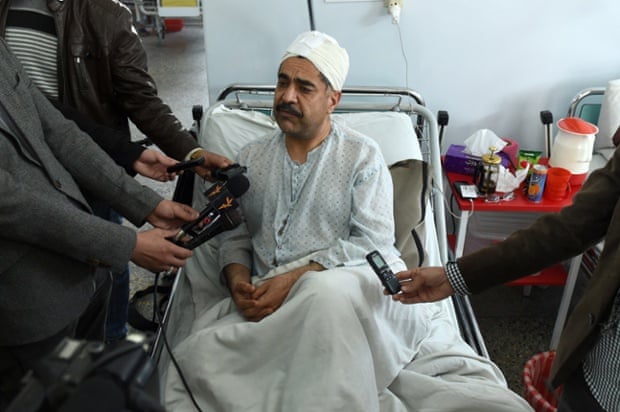
On 11 December, the professor was enjoying the fruits of many months’ labour when his orchestra performed alongside a drama troupe at the French cultural centre in Kabul. Sarmast was seated in the front row.
“The show was a beautiful one. The music was so powerful, the actors’ playing so masterly,” Sarmast remembered.
At one point during the performance, he heard a commotion outside the hall. Following routine, he reached for his mobile phone to check if his driver had alerted him to anything.
That second, a blast ripped through the crowd. Sarmast was knocked unconscious. “I felt like someone with a cricket bat hit my head with his entire energy and power,” Sarmast recalled.
Source: The Guardian


More Stories
Massive peoples protest against poor economy and shortages in Sri Lanka
Xi Jinping says China will uphold world peace and international law
Brown, Desi, South Asian: Diaspora reflects on the terms that represent, erase them